Asosiy ma'lumotlar
Minimus buyurtma miqdori:10T
Yetkazib berish vaqti:15Days
Etkazib berish usuli:sea transportation
xususiyat raqami:ZLLSIL-MF200 Silica Dispersion (Colloidal Silica for Fire-Resistant Glass)
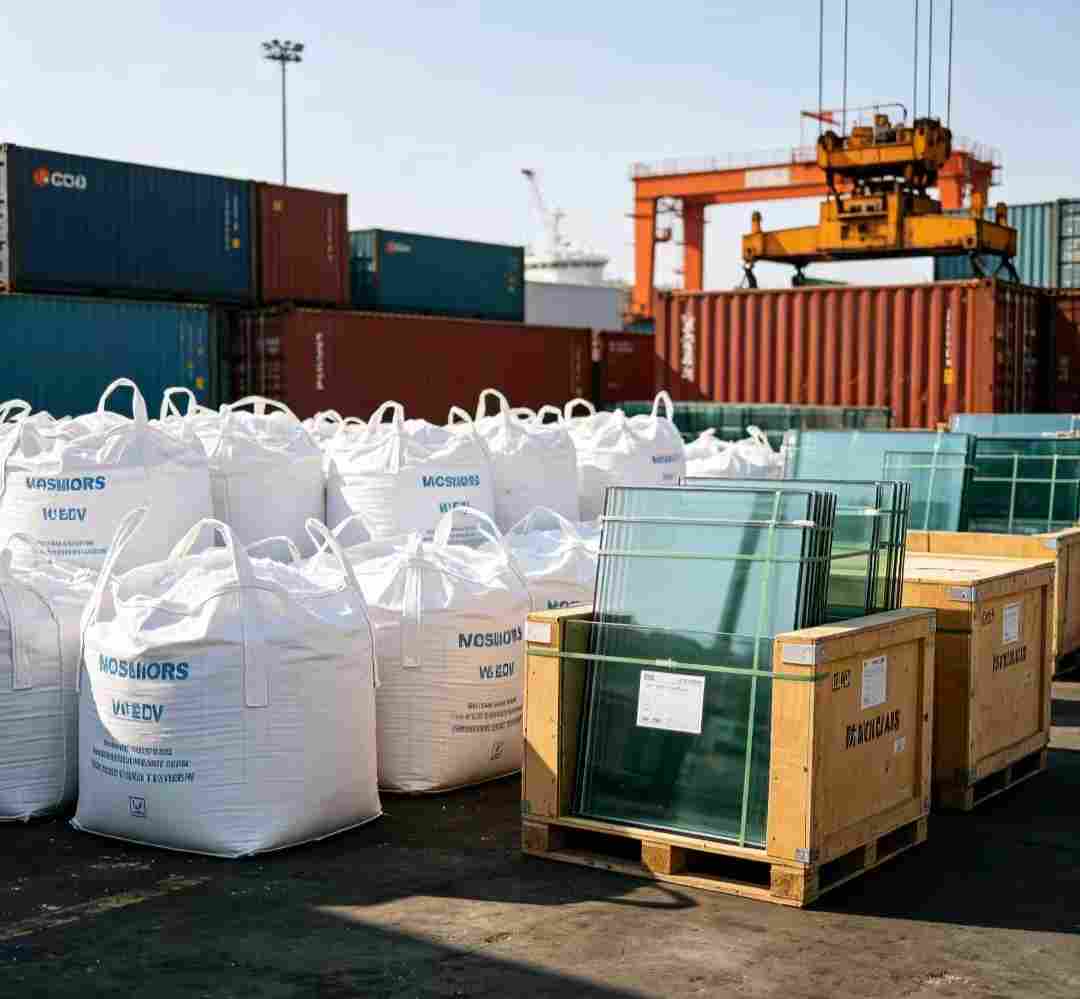
Upakovochniy ta'rif:Woven bag ton bag
Mahsulot ta'rif
1. Product advantages
Zhongqi Guangdong Silicon Material Co., Ltd. specializes in developing non-yellowing food-grade silica dioxide, specifically designed to address the critical challenge of "color discoloration from anti-caking agents affecting both appearance and safety" in food processing. This product effectively prevents color changes caused by ethyl maltol's reaction with iron ions, achieved through ultra-low heavy metal content and rigorous process control. Certified to GB 25576-2010 and FDA 21 CFR standards, its core features include: -UV/heat-resistant properties (no yellowing or fading) -High purity with low heavy metals-Enhanced anti-caking performance (40%+ improved flowability) -Customizable particle size (2-50μm) -GMP-certified manufacturing facility-Pre-sales sampling + post-sales technical support-Serving baking, confectionery, and other food industries with export markets in Southeast Asia/Europe and America.
2、 Factory advantages
Zhongqi Guangdong Silicon Materials Co., Ltd., a national high-tech enterprise and provincial-level specialized, refined, unique, and innovative enterprise, has been dedicated to the industry for over two decades. The company holds 17 patented technologies and operates a GMP-certified production base. Equipped with advanced testing instruments including atomic fluorescence spectrometers and laser particle analyzers, it has established a comprehensive quality control system comprising 26 inspection processes spanning raw materials to finished products. The company has obtained ISO22000 certification for food safety management systems.
3. Packing for shipment
• Standard packaging: 10/15/20kg woven bags.
• Waterproof design: the packaging adopts composite film valve bag + a layer of PE on the outside; or PE inner film bag + plastic woven bag, and strictly do a good job in protection to prevent water intrusion.
• Storage and transportation requirements: store in cool and dry environment, shelf life of 24 months; non-hazardous chemical, support global shipping/carrying.
• Labeling specification: each package shall be marked with legal information such as food additives, added limits and production license number, or the label head shall be posted according to customer requirements.
4. Qualifications and Honors
• FSSC22000
• ISO22000:2018
• ISO9001:2015
• SHC HALAL
• OU KOSHER
• FDA attestation
• FAMI-QS
• SEDEX
• Food additive production license
• Feed additive production license
• National high-tech enterprise
• Specialized, refined and new enterprises in Guangzhou
• 17 patents from the State Intellectual Property Office
1.Q: What is the pH value of the product? Why is it made alkaline? A: The pH value is controlled in the alkaline range of 9.0~10.5 at 25℃. In an alkaline environment, the surface of nano-silica is negatively charged, and the colloidal dispersion stability is maintained through charge repulsion effect, preventing gelation and precipitation during storage.
2.Q: What is the viscosity range of the product? Will it affect the pouring construction? A: The viscosity is 10~50mPa·s at 25℃, which increases with higher solid content. The product has optimized rheological properties and uniform fluidity. It is not prone to generate bubbles and flow marks during pouring, and is compatible with both manual pouring and automated production line equipment.
3.Q: What are the core performance differences between curtain wall grade and general purpose grade? A: Curtain wall grade has three key upgrades based on general purpose grade:
Upgraded weather resistance: Light transmittance loss ≤2% after 1000 hours of QUV accelerated aging test
Upgraded bonding strength: Bonding strength with glass substrate ≥2.5MPa
Lower curing shrinkage: ≤3%, suitable for production of large-size curtain wall glass over 2m×3m
III. Fire Protection & Weathering Mechanism
1.Q: How exactly does colloidal silica achieve fire and heat insulation? A: It builds multiple fire barriers through three phase transitions under high temperature in case of fire: ① 100-200℃: Free water evaporates gradually, absorbing a large amount of latent heat and delaying temperature rise on the unexposed surface ② 300-600℃: Silanol groups undergo dehydration polycondensation, and nanoparticles cross-link to form a three-dimensional dense gel insulation layer ③ Above 800℃: The gel layer is sintered and ceramized into a rigid refractory barrier, with thermal conductivity dropping below 0.12W/(m·K), blocking heat conduction and flame penetration
2.Q: Why can it solve the industry pain point of alkali efflorescence and whitening of fire glass? A: The core cause of alkali efflorescence and whitening is the migration and precipitation of sodium ions from the fire-resistant liquid to the glass surface. This product adopts a low-sodium formula, with sodium oxide content much lower than traditional water glass systems. Meanwhile, the dense silica network structure formed after curing blocks the migration path of alkali metal ions, inhibiting alkali efflorescence from the source.
3.Q: Will it produce toxic fumes at high temperatures? A: No. The product is all-inorganic composition, with silica and deionized water as core components. It contains no halogens, organic matter, heavy metals or other components. It does not burn, support combustion, or release formaldehyde, heavy smoke or toxic and harmful gases at high temperatures, complying with fire safety and environmental protection requirements for public buildings.
4.Q: Is the cured gel layer water-resistant and UV-resistant? How long can it be used outdoors? A: General purpose grade has basic water and UV resistance, suitable for indoor scenarios. Curtain wall grade products, with surface densification modification, have greatly improved water, acid and UV resistance. There is no yellowing or chalking after 1000 hours of QUV accelerated aging test, and the normal service life in outdoor curtain wall scenarios can reach more than 25 years.
5.Q: Will the cured layer crack or peel off under temperature difference environments? A: The thermal expansion coefficient of the cured product is highly matched with that of glass substrates. General purpose grade can withstand temperature cycling from -20℃ to 80℃, while curtain wall grade can withstand 50 cycles from -40℃ to 80℃ without cracking or delamination, adapting to the application environments of different climate regions across the country.
IV. Production & Construction Process
1.Q: What is the basic process flow for producing fire glass with this product? A: The core process is divided into five steps: ① Formulation preparation: Mix colloidal silica, curing agent and additives at low speed in proportion ② Vacuum degassing: Degas for 30~60 minutes under -0.08~-0.09MPa ③ Pouring and forming: Inject into glass interlayer by vacuum or pressure method ④ Gradient curing: Cure by stepwise temperature rise to eliminate internal stress ⑤ Post-treatment: Edge trimming, cleaning, quality inspection and packaging
2.Q: What curing agents are generally used? What is the addition ratio? A: It is commonly matched with alkaline curing agents, such as potassium hydroxide solution or sodium hydroxide solution, and organic amine curing agents can also be used. The addition ratio is adjusted according to curing speed and fire resistance requirements, usually 1%~3% of the mass of colloidal silica. It is recommended to conduct sample tests first to determine the optimal ratio.
3.Q: How long does vacuum degassing take? What are the precautions? A: The recommended degassing time is 30~60 minutes, and the vacuum degree is controlled at -0.08~-0.09MPa. Note that the stirring speed should not be too fast to avoid entraining a large number of bubbles. Let it stand for 10~15 minutes after degassing before pouring to further eliminate micro-bubbles and improve the optical quality of finished products.
4.Q: What is the reasonable setting for temperature and time of gradient curing? A: Three-stage curing process is recommended, suitable for most production scenarios: